
Small businesses often handle many financial tasks at once. Sales, expenses, invoices, salaries, and bank payments can quickly become difficult to track. A regular bookkeeping routine helps keep these records organized and easier to review.
Monthly bookkeeping gives a business a set time to check its financial records, spot errors and prepare for the next month. It also helps business owners understand where money is coming from and where it is going.
A clear bookkeeping checklist can make this process easier. Instead of checking records only when a tax filing or financial review is due, businesses can follow the same steps every month. This creates better financial habits and reduces the risk of missing important entries.
Why Monthly Bookkeeping Matters for Small Businesses
Good records are useful for more than tax work. They help business owners understand the financial position of the business and make informed decisions.
Regular financial record keeping can help a business:
- Track income and business expenses
- Identify unpaid customer invoices
- Check whether suppliers have been paid
- Monitor cash flow
- Find unusual transactions
- Keep supporting documents organised
- Prepare records for tax and compliance needs
A monthly routine also makes financial information easier to review. When records are updated regularly, problems can be found before they become harder to fix.
For small businesses with limited staff, a simple process can make a major difference.
A Practical Monthly Bookkeeping Checklist
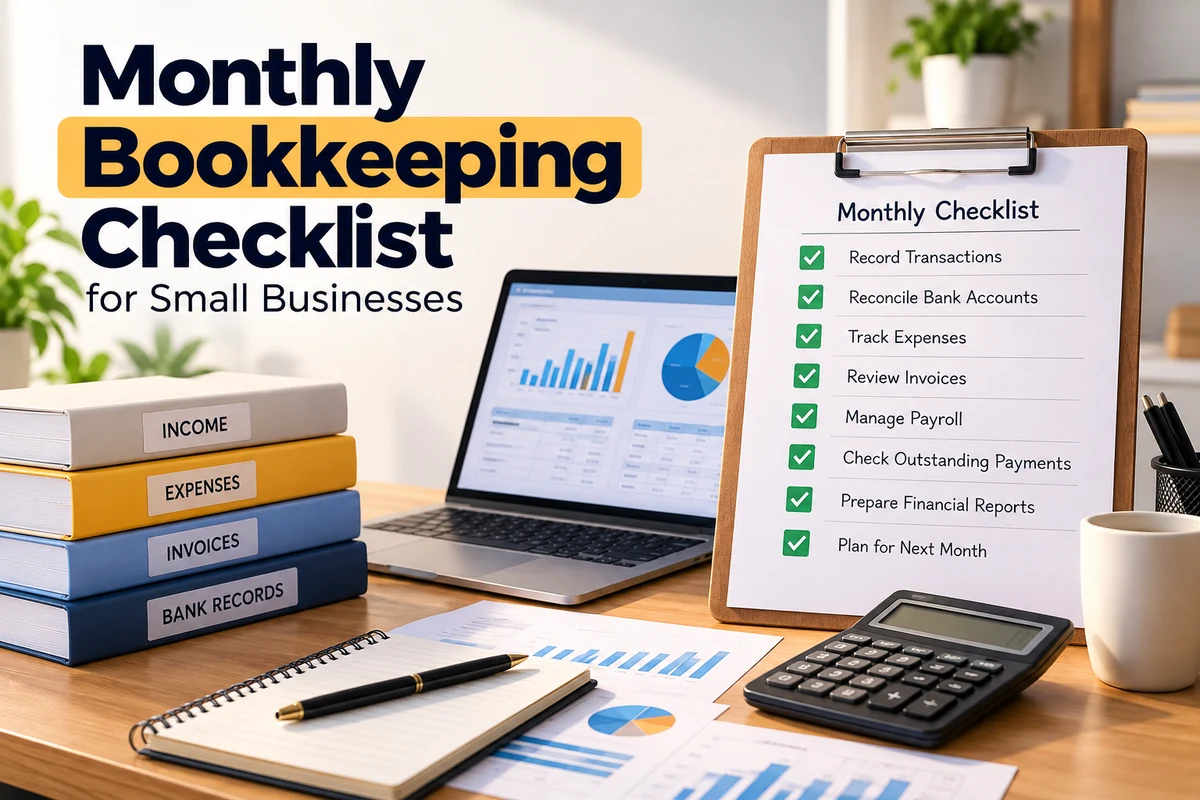
A good bookkeeping checklist should cover the main financial records without making the process too complex. The exact tasks may vary by business, but the following steps provide a useful monthly routine.
1. Record All Sales and Income
Start by checking that all sales made during the month have been recorded.
Match sales records with invoices, receipts and payment records. Check that cancelled invoices or refunds have also been entered correctly.
If the business receives payments through different channels, such as bank transfers, cards or online payment platforms, each source should be reviewed.
2. Review Business Expenses
The next step is to check all business spending.
Collect receipts, supplier invoices and other supporting documents. Match these records with the transactions shown in the business bank account.
Common bookkeeping tasks at this stage include checking:
- Office expenses
- Software subscriptions
- Travel costs
- Utility payments
- Supplier bills
- Advertising costs
- Professional service payments
Missing receipts or unclear transactions should be investigated before the records are closed for the month.
3. Reconcile Bank and Cash Accounts
Bank reconciliation is one of the most important monthly checks.
Compare the business’s accounting records with the bank statement. The balances should match after accounting for valid timing differences, such as payments that have not yet cleared.
Check for:
- Unrecorded bank charges
- Duplicate entries
- Missing payments
- Incorrect amounts
- Unknown transactions
This step can catch errors that may otherwise affect financial reports.
Check Invoices, Bills and Outstanding Payments
Unpaid invoices can affect a small business’s cash flow. Monthly reviews help identify customers who still owe money.
Check the accounts receivable list and group invoices by their due dates. Follow up on overdue amounts based on the business’s normal payment process.
Supplier bills should also be reviewed. Confirm that outstanding bills are recorded and that payments made during the month have been matched to the correct bills.
These bookkeeping tasks help create a clearer picture of money expected to come in and payments that need to go out.
Review Payroll and Employee Payments
Payroll records should be checked each month, even when salary payments are handled through separate software.
The review can include:
- Gross salary records
- Deductions
- Employer contributions where applicable
- Employee reimbursements
- Salary payments
- Payroll-related records
Any difference between payroll records and bank payments should be investigated.
Businesses should also keep payroll documents safely and follow applicable employment, tax and record-keeping requirements.
Complete A Month-End Review
Once the main entries have been checked, the business can move towards its month end closing checklist.
This stage brings together the key financial checks for the month. A simple review may include:
| Monthly Check | What To Review |
| Income | Sales, invoices and receipts |
| Expenses | Bills, receipts and payments |
| Bank | Reconciled balances |
| Receivables | Unpaid customer invoices |
| Payables | Outstanding supplier bills |
| Payroll | Salary and payroll records |
| Taxes | Relevant records and liabilities |
| Documents | Supporting financial records |
The month end closing checklist should be completed consistently. If an entry is unclear, it is better to investigate it before the month is closed rather than carry the issue forward.
Follow Simple Bookkeeping Best Practices
A good bookkeeping system does not need to be complicated. It needs to be consistent.
Following basic bookkeeping best practices can help small businesses maintain cleaner records throughout the year.
Some useful habits include:
- Keep business and personal transactions separate
- Record transactions soon after they happen
- Store receipts and invoices in an organised way
- Use clear descriptions for unusual transactions
- Reconcile accounts every month
- Review outstanding invoices regularly
- Keep financial documents for the required period
- Restrict access to sensitive financial information
These habits support better financial record keeping and make financial reviews less stressful.
Make The Checklist Part of the Monthly Routine
The biggest benefit of a checklist is consistency. A business does not have to complete every task at the same time, but each task should have a clear place in the monthly process.
A useful routine could look like this:
- Week 1: Record income and expenses and collect missing documents.
- Week 2: Reconcile bank and payment accounts.
- Week 3: Review receivables, payables and payroll.
- Week 4: Complete the month end closing checklist and review the main reports.
The routine can be adjusted based on the size and nature of the business. A growing accounting company may need more frequent checks, while a smaller operation may manage with a monthly review.
Keep Records Ready for Better Decisions
Bookkeeping should not stop at recording transactions. The information should also help business owners understand the business.
Regular monthly bookkeeping can make it easier to review revenue, expenses, cash flow and outstanding payments. Over time, these records can show patterns that may need attention.
For example, a business may notice that certain expenses rise each month or that customers are taking longer to pay. Such observations can support better planning.
Using reliable software, keeping documents organised and following a repeatable bookkeeping checklist can also reduce the amount of manual work involved.
Build A More Reliable Financial Process
A structured monthly process helps small businesses keep their financial records accurate, organised and easier to review. Regular reconciliation, invoice checks, expense reviews and payroll checks can reduce errors and improve visibility.
Strong Bookkeeping Services For Small Business is best practices also make it easier to maintain records throughout the year. Instead of dealing with a large backlog, businesses can address issues as they arise.
For growing businesses, having a clear process becomes even more important as transaction volumes increase. Professional support may also be useful when internal teams do not have enough time or expertise to manage all bookkeeping tasks consistently.
Infinzi supports startups, SMEs and growing businesses with accounting and bookkeeping services. Their approach can help businesses manage routine financial work while keeping their records organised. Businesses looking for structured financial record keeping can connect with Infinzi to discuss their bookkeeping requirements. Need help managing your monthly books? Speak with Infinzi today and build a bookkeeping process that works for your business.