
For small and growing businesses, accounting can become more demanding as operations expand. Invoices increase, expenses need tracking, employees need to be paid, and financial reports must stay accurate. Managing all these tasks in-house can take valuable time away from daily business activities.
Outsourced accounting allows SMEs to work with an external team for selected or complete accounting functions. Depending on the arrangement, this may include bookkeeping, payroll, reconciliations, reporting, and other finance tasks.
This guide explains how outsourced accounting works, the services SMEs can outsource, and the benefits it can offer. It also covers key points businesses should consider before choosing an accounting partner.
What Is Outsourced Accounting?
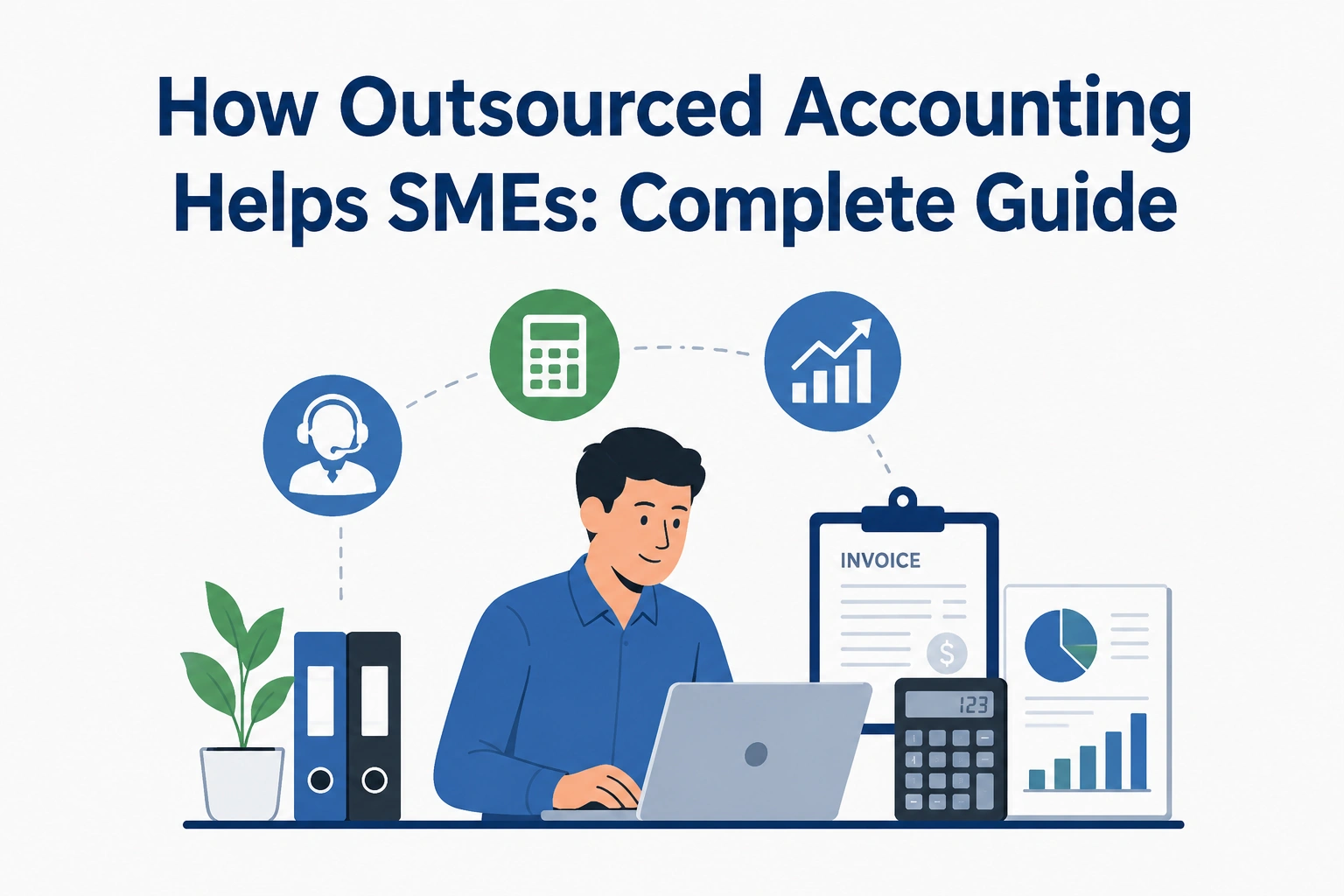
Outsourced accounting means assigning some or all accounting tasks to an external service provider. The provider works with the business to manage agreed financial activities and maintain organized records.
The level of support can vary based on the company’s needs. Some SMEs may only need bookkeeping support, while others may require a wider range of finance services.
Common outsourced accounting services include:
- Bookkeeping and transaction recording
- Bank and account reconciliation
- Accounts payable and receivable
- Payroll processing
- Financial reporting
- Expense tracking
- Tax and compliance support
- Management accounts
- Cash flow monitoring
- Accounting software support
This approach allows an SME to choose the functions that need external support without immediately creating a large internal finance department.
Why SMEs Choose Accounting Outsourcing
SMEs often operate with smaller teams. A founder or manager may handle accounting alongside sales, operations, customer service, and other responsibilities.
This can become difficult as the business grows.
Outsourcing can move routine financial tasks to an external team with relevant accounting experience. This gives internal employees more time to focus on their main responsibilities.
Some common reasons SMEs consider outsourcing include:
- Reduced workload: Routine accounting tasks do not have to remain entirely with business owners or internal staff.
- Access to expertise: External teams can bring experience across bookkeeping, payroll, reporting, and other financial processes.
- Consistent processes: Regular tasks can follow defined procedures and schedules.
- Support during growth: Finance requirements can change as a business hires staff, adds customers, or expands its operations.
- Flexible services: Businesses can choose the level of support based on their current requirements.
The goal is not simply to hand over financial work. It is to create a clear process that supports the business.
Key Accounting Services SMEs Can Outsource
Accounting outsourcing covers more than basic bookkeeping. SMEs can outsource several connected finance functions based on their workload.
Bookkeeping And Reconciliation
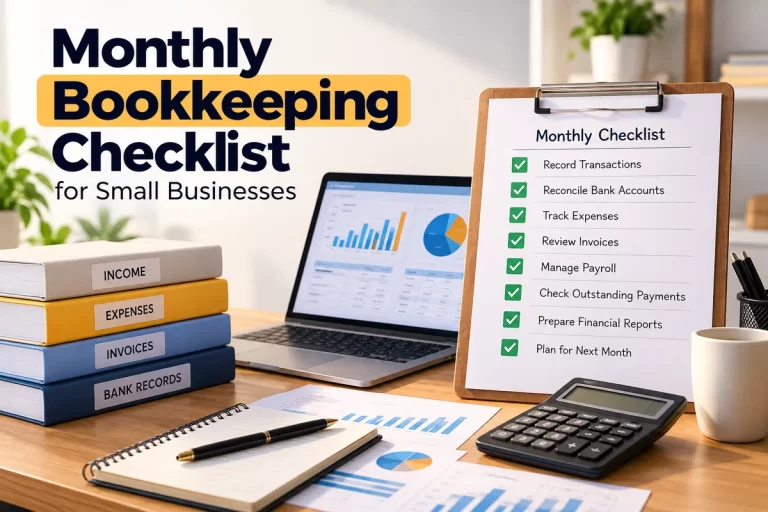
Bookkeeping provides the foundation for accurate financial records. Transactions need to be recorded correctly, while bank and account records should be checked regularly. An external team can manage routine bookkeeping and keep records organized.
Regular reconciliation can also help identify differences between accounting records and bank statements. This gives business owners a clearer view of their financial position.
Managing Payroll Responsibilities
Employee payments involve several recurring tasks. Payroll records need to be maintained, deductions need to be handled, and payment schedules need to be followed.
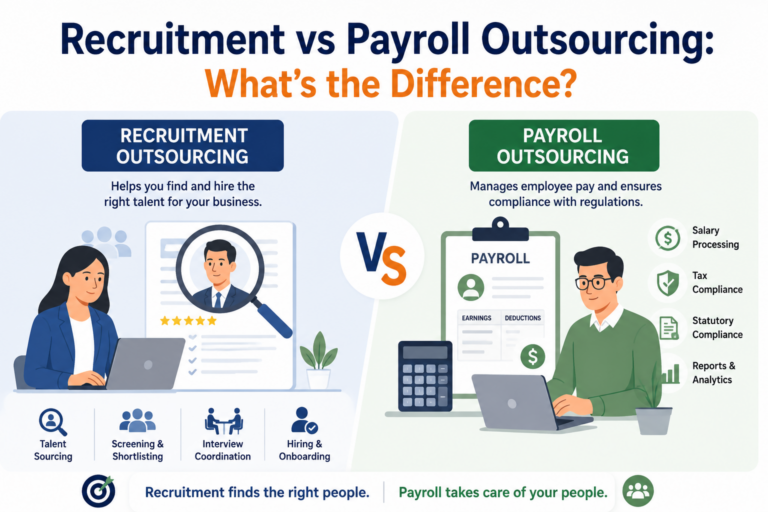
Payroll management can be outsourced as part of a wider accounting service. External support can help SMEs handle recurring payroll tasks while keeping employee information organized. The provider should also understand the payroll rules that apply to the business and its employees.
Preparing Financial Reports
Financial reports help owners and managers understand how a business is performing.
Financial reporting may include regular information about income, expenses, cash position, and other financial figures. Clear reports can make it easier to review performance and identify areas that need attention. They can also support budgeting and business planning.
How Outsourcing Helps Startups
Startups often have limited resources and changing financial needs. They may begin with a small number of transactions and gradually develop more complex accounting requirements.
Startup accounting provides the financial foundation needed as a new business develops. Outsourced bookkeeping can help startups manage day-to-day financial tasks such as recording transactions, tracking expenses, reconciling accounts, and maintaining accurate records without building a full in-house finance team.
Instead of hiring a complete finance team at an early stage, a startup can outsource selected accounting functions. This provides access to professional support while allowing the internal team to focus on products, customers, sales, and growth.
As the company develops, its accounting arrangement can also be reviewed and changed.
The Role of Accounting Automation
Technology has changed the way many accounting tasks are completed. Accounting software can reduce manual work and help businesses manage financial information more efficiently.
Accounting automation can support repetitive processes such as invoice recording, expense entries, bank feeds, and report generation.
Common examples include:
- Automated invoice processing
- Digital expense recording
- Recurring transaction entries
- Bank feed integration
- Payment reminders
- Report generation
- Digital document storage
Automation does not remove the need for accounting knowledge. Financial records still need to be reviewed and checked. Human oversight is especially important when transactions are unusual, or financial information is being used for important decisions.
Outsourced Accounting Vs an In-House Team
Both approaches can work well. The right choice depends on the company’s size, workload, budget, and long-term requirements.
An in-house team gives the business direct access to employees who work within the organization. This may be useful when accounting needs are large and complex.
Outsourcing provides access to an external team without requiring the business to recruit every finance role internally.
| Factor | Outsourced Accounting | In-House Accounting |
| Team structure | External accounting team | Internal employees |
| Recruitment | Lower internal hiring needs | Requires recruitment |
| Flexibility | Services can be adjusted | Changes may require new hires |
| Expertise | Access to external specialists | Depends on internal employees |
| Management | Based on agreed processes | Direct internal management |
Some SMEs may also use a mixed approach. For example, an internal employee may manage approvals while an external team handles bookkeeping and reporting.
How Outsourcing Can Support Business Growth
Growth often brings new accounting demands. A company may add employees, serve more customers, increase transactions, or introduce new products.
Its accounting processes need to keep pace. An external accounting team can help manage recurring finance tasks as the workload increases. This can reduce the need to expand the internal finance department for every new requirement.
It can also give business owners access to regular financial information without requiring them to handle every accounting task themselves.
However, outsourcing should not remove financial oversight. Business owners and managers should still review reports, understand cash flow, and question important changes in financial performance.
What SMEs Should Check Before Outsourcing
Choosing an accounting provider requires more than comparing prices. Financial records often contain sensitive business and employee information, so SMEs should carefully assess the provider before entering an agreement.
Here are some important areas to check:
- Services offered: Make sure the provider covers the accounting functions the business needs.
- Experience: Relevant experience can help an external team understand common accounting requirements.
- Technology: Check which accounting software and systems the provider uses.
- Communication: Agree on how reports, updates, questions, and urgent matters will be handled.
- Data security: Understand how financial and employee information is stored and protected.
- Scalability: Check whether the provider can support the business if its workload increases.
- Reporting: Make sure financial reports are clear, regular, and useful for management decisions.
The agreement should also define responsibilities, deadlines, deliverables, access rights, and communication procedures.
Creating A Practical Outsourced Accounting Process
A good outsourcing arrangement starts with clear expectations. The business should first identify the accounting tasks that take up the most time or require specialist support.
Next, responsibilities should be divided between the internal team and the external provider.
For example, managers may retain control over approvals and financial decisions, while the external team handles agreed bookkeeping, payroll, and reporting tasks.
Regular reviews can then help both sides adjust the arrangement as business needs change. This makes outsourcing a managed business function rather than simply handing over financial work without a defined process.
Give Your Finance Function Room To Grow
Outsourced accounting can give startups and SMEs practical support as their financial workload increases. It can cover bookkeeping, payroll, reporting, reconciliations, and other accounting activities while allowing internal teams to focus on core business responsibilities.
The right approach depends on each business. Some SMEs may only need support with a few accounting tasks, while others may benefit from wider finance services. Clear processes, accurate reporting, secure data handling, and regular communication are important in either case.
Infinzi provides accounting and business support services for startups, SMEs, and growing businesses. They help businesses manage essential financial and operational functions through professional external support. Their services can help companies organise accounting responsibilities while keeping internal teams focused on their core activities. Businesses considering outsourced accounting can work with Infinzi to identify the services that fit their current requirements.