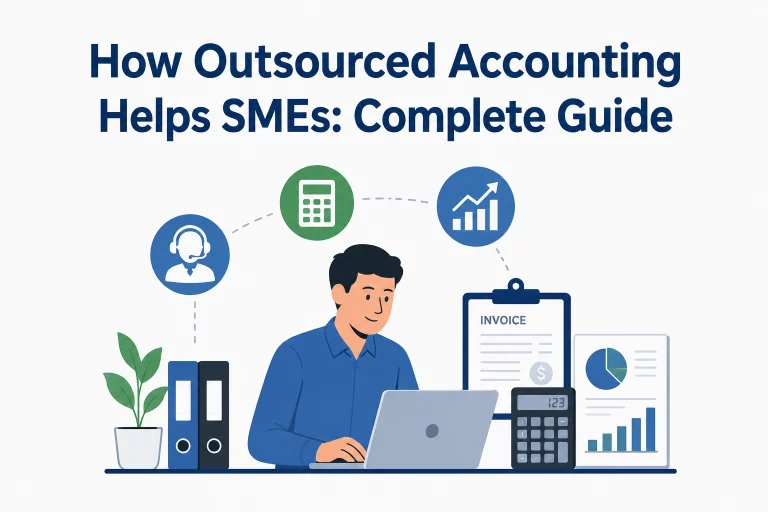


As businesses expand, the complexity of financial operations increases, making structured bookkeeping support more important than ever.
Managing business finances can become difficult as work increases. Tasks such as invoicing, expense tracking, and financial reporting often take too much time and slow down daily operations.
As a result, several businesses are now adopting outsourced accounting and bookkeeping services to manage their financial tasks more easily. It helps companies reduce workload, save costs, and avoid the stress of handling everything with an in-house team.
From startups to accounting firms, businesses are using outsourcing to improve accuracy and focus more on growth. This blog explains how outsourced bookkeeping services in India work, their benefits, pricing factors, and what businesses should check before choosing a provider.
Why Businesses Are Choosing Outsourced Bookkeeping Services
Finance management is no longer limited to large corporations. Even small businesses now require accurate bookkeeping, faster reporting, and better financial visibility to stay competitive.
According to Grand View Research, the global business process outsourcing market continues to grow as businesses seek cost-effective operational support. This growth is also increasing the demand for outsourced accounting companies across industries.
Some major reasons businesses are outsourcing bookkeeping include:
- Rising hiring and training costs
- Lack of skilled accounting professionals
- Increasing compliance requirements
- Need for cloud-based financial access
- Faster monthly reporting expectations
A growing number of businesses also prefer outsourced accounting and bookkeeping because it allows internal teams to focus more on sales, operations, and growth rather than manual financial tasks.
For accounting firms, the trend is even stronger. Many firms now outsource bookkeeping for accountants to handle seasonal workload pressures and improve client servicing capacity.
Outsourcing is no longer viewed as a temporary cost-saving solution. It is becoming a long-term operational strategy for businesses that want flexibility and scalability.
How Outsourced Bookkeeping Services Work
Many businesses assume outsourcing is complicated, but the process is usually structured and technology driven. Most providers use cloud accounting systems that allow real-time collaboration and secure financial management.
Step-by-Step Process
The typical bookkeeping outsourcing process includes:
- Collecting invoices, receipts, and financial records
- Connecting accounting software platforms
- Recording daily transactions
- Reconciling bank statements
- Preparing financial reports
- Managing accounts payable and receivable
- Supporting tax-ready documentation
Most outsourced bookkeeping companies provide weekly or monthly reporting based on business requirements.
Common Tools Used
Some commonly used tools include:
- QuickBooks for small business accounting and expense tracking
- Xero for cloud bookkeeping and financial reporting
- Zoho Books for invoice management and automation
- FreshBooks for billing and client payment tracking
- NetSuite for enterprise-level accounting and ERP management
Several outsourced accounting companies also integrate ERP systems, payroll software, and CRM platforms to improve reporting accuracy.
The biggest advantage of this model is accessibility. Business owners can monitor financial performance remotely without depending entirely on internal teams.
Key Benefits of Outsourced Bookkeeping Services
Businesses often choose to outsource for operational efficiency and financial control. The right bookkeeping partner can improve reporting accuracy while reducing internal workload.
Financial Benefits
Some major cost-related advantages include:
- Lower employee hiring expenses
- Reduced infrastructure costs
- No additional software maintenance burden
- Flexible monthly pricing models
- Lower training and onboarding costs
Many SMEs use outsourced accounting and bookkeeping services to avoid building a large in-house finance department during early growth stages.
Business Benefits
Operational advantages include:
- Faster financial reporting
- Better compliance management
- Reduced human errors
- Improved scalability
- More time for business growth
Businesses that partner with outsourced bookkeeping companies also gain access to experienced professionals without long recruitment cycles.
Benefits for Accounting Firms
Many accounting firms now outsource bookkeeping for accountants to manage repetitive tasks efficiently.
This helps firms:
- Handle more client accounts
- Improve turnaround time
- Reduce staff burnout
- Increase profitability
- Focus on advisory services
The demand for outsource bookkeeping for accountants are growing because firms want scalable support without increasing fixed operational costs.
Outsourcing creates both financial and strategic advantages when implemented with the right processes and technology.
Cost Breakdown of Outsourced Bookkeeping Services
Cost is one of the biggest factors businesses evaluate before outsourcing bookkeeping. Pricing usually depends on transaction volume, service complexity, and reporting requirements.
Factors Affecting Pricing
Several factors influence outsourcing costs:
- Number of monthly transactions
- Industry-specific compliance needs
- Payroll management requirements
- Tax preparation support
- Software integrations
- Multi-location operations
Businesses working with outsourced accounting companies often choose customised pricing models based on operational requirements.
Common Pricing Models
Outsourced bookkeeping pricing is usually designed to match different business sizes and financial needs. The cost depends on factors like transaction volume, complexity of work, and level of ongoing support required.
- Hourly Pricing: Businesses are charged based on the actual hours spent on bookkeeping tasks, making it suitable for small or irregular requirements.
- Monthly Retainer Plans: A fixed monthly fee is charged for continuous bookkeeping support, offering predictable costs and steady financial management.
- Project-Based Pricing: This model is used for one-time work such as cleanup, system setup, or migration of financial records.
- Custom Enterprise Pricing: Large businesses with complex operations get tailored pricing based on their reporting structure and workload.
Overall, these pricing models give flexibility to businesses so they can choose a structure that aligns with their operations, budget, and long-term financial needs.
In-House vs Outsourced Comparison
| Factor | In-House Team | Outsourced Services |
| Hiring Cost | High | Lower |
| Training | Required | Not required |
| Scalability | Limited | Flexible |
| Software Cost | Separate investment | Often included |
| Reporting Speed | Depends on team size | Usually faster |
Many growing companies choose outsourced accounting and bookkeeping because it provides predictable costs and easier scalability.
Cost savings become more visible when businesses compare long-term operational expenses instead of short-term monthly pricing alone.
Industries That Benefit Most from Outsourced Bookkeeping
Bookkeeping outsourcing is useful across multiple industries. Businesses with high transaction volume or compliance requirements usually benefit the most.
- SMEs and Startups
Startups often need financial clarity without hiring a full accounting team.
Benefits include:
- Lower operational expenses
- Investor-ready financial reports
- Better cash flow tracking
- Faster scalability
Many startups rely on outsourced bookkeeping companies during early growth stages to maintain financial accuracy while controlling costs.
- Ecommerce Businesses
Ecommerce businesses manage large transaction volumes daily.
Outsourcing helps with:
- Marketplace reconciliation
- Inventory tracking
- GST/VAT management
- Payment gateway reporting
- Healthcare and Real Estate Firms
Healthcare providers and real estate companies often deal with complex compliance and vendor management processes.
Many of these businesses partner with outsourced accounting companies to improve reporting consistency and reduce administrative burden.
- Accounting Firms
Accounting firms increasingly outsource bookkeeping for accountants to focus on advisory and tax planning services instead of repetitive data entry tasks.
This allows firms to improve client retention and operational efficiency simultaneously.
Different industries face distinct financial challenges, but outsourcing provides the flexibility to support both small and large businesses effectively.
Challenges and Things to Consider Before Outsourcing
While outsourcing offers several advantages, businesses should still evaluate potential risks before selecting a provider. A poor outsourcing decision can affect reporting quality and compliance management.
Common Concerns
Some common outsourcing concerns include:
- Data privacy risks
- Communication delays
- Hidden service charges
- Limited industry expertise
- Time zone differences
Businesses should carefully evaluate service agreements before working with outsourced bookkeeping companies.
How to Choose the Right Partner
Before selecting a service provider, businesses should carefully evaluate a few important factors:
- Industry experience
- Security protocols
- Software expertise
- Reporting transparency
- Scalability support
- Client reviews and case studies
Many companies compare multiple outsourced accounting companies before finalising a long-term partnership.
Businesses looking to outsource bookkeeping for accountants should also verify turnaround timelines and workflow management capabilities.
The right outsourcing partner should act as an operational support system rather than just a third-party vendor.
Real-World Examples of Outsourced Bookkeeping Success
Many businesses achieve measurable operational improvements after outsourcing bookkeeping functions. These improvements are often visible within the first few months.
- Startup Example
A SaaS startup reduced internal finance costs by nearly 40% after shifting to outsourced accounting and bookkeeping support.
The company used outsourcing to:
- Manage investor reporting
- Track recurring revenue
- Improve expense categorisation
- Reduce manual accounting errors
- Ecommerce Example
An online retail business partnered with one of the leading outsourced bookkeeping companies to manage multi-platform sales reconciliation.
This improved:
- Monthly closing speed
- Tax reporting accuracy
- Inventory visibility
- Financial forecasting
- Accounting Firm Example
A mid-sized accounting firm decided to outsource bookkeeping for accountants during tax season.
As a result, the firm:
- Increased client handling capacity
- Reduced overtime costs
- Improved client response time
- Focused more on strategic consulting
These examples show how outsourcing can support both operational efficiency and long-term business growth.
A Practical Approach to Modern Bookkeeping Management
As businesses grow, financial management also becomes more demanding. Keeping records organised, tracking cash flow, and maintaining reporting accuracy can take significant time and effort when handled internally. This is why many companies are now exploring smarter ways to manage bookkeeping without increasing operational burden.
Infinzi supports businesses seeking structured, scalable financial management solutions. They help companies streamline accounting processes, improve reporting efficiency, and manage daily financial operations more effectively through outsourced accounting and bookkeeping support.
With the right outsourcing approach, businesses can improve financial visibility while giving internal teams more time to focus on growth and decision-making. A reliable bookkeeping system not only improves operational efficiency but also creates a stronger foundation for long-term business stability.