

As businesses grow, keeping financial records accurate becomes harder than expected. This blog explains how offshore accounting practices help SMEs stay organised, compliant, and confident about their numbers.
In the early days, managing finances felt manageable. Transactions were fewer, compliance timelines were simpler, and spreadsheets seemed to work just fine. But as SMEs grow, the picture has changed quickly. More customers mean more invoices. More vendors mean more payments. Compliance deadlines start overlapping.
What once worked begins to break under scale. In-house teams feel stretched, and errors creep in. This is where offshore accounting enters the conversation. Not as a shortcut, but as a structured way to maintain accuracy without expanding internal teams. This blog looks at how offshore accounting can help startups and SMEs, focusing on the practices that actually keep financial records clean, reliable, and decision-ready.
What Offshore Accounting Looks Like in Real SME Setups
Offshore accounting simply means that certain finance and accounting tasks are handled remotely by specialised teams, often based in India. These teams work within the SME’s systems and processes, following defined workflows and reporting timelines.
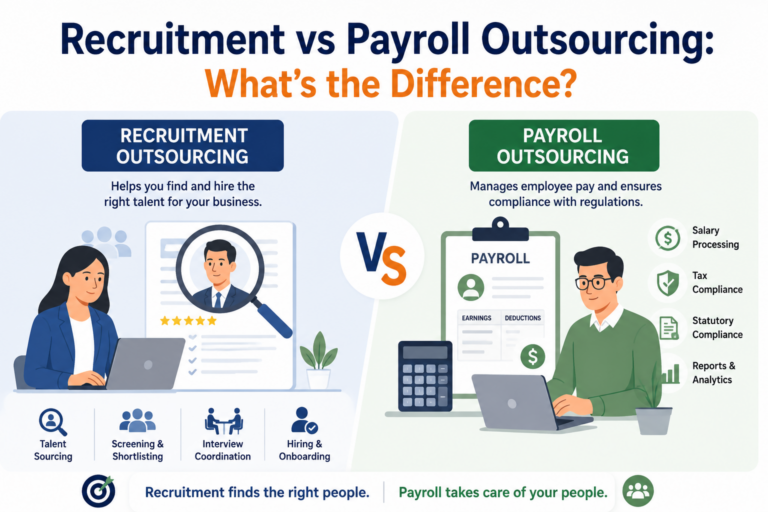
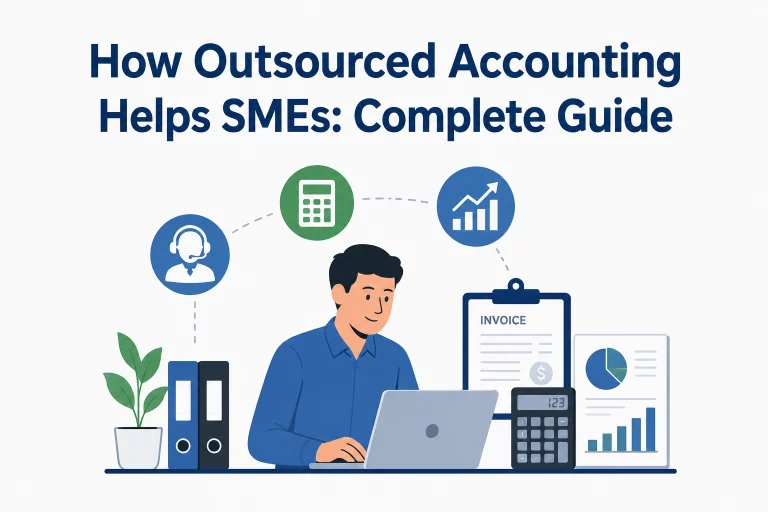
Generally, offshore accounting for small- to medium-sized enterprises involves operational tasks such as bookkeeping, bank and vendor reconciliations, financial reporting support, payroll processing, and compliance preparation. Strategic decisions and approvals are made only by the business owner or the finance head.
The main issue is control. An offshore accounting unit is not a total internal cessation of control. It is a form of support. The business owners are still the ones who decide what is important. The offshore teams are the ones who make sure that the figures that form the basis of those decisions are correct and current.
The Accounting Habits That Actually Keep Records Clean
Accurate books are rarely the result of last-minute fixes. They come from boring consistency. Offshore teams tend to be good at that.
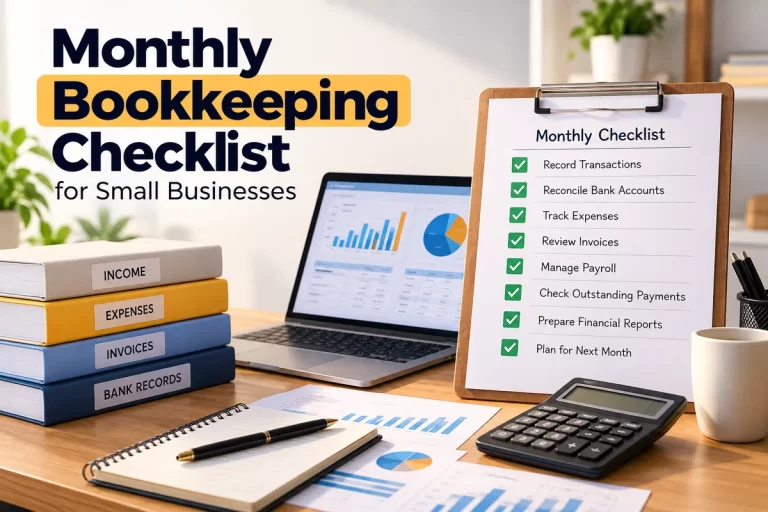
Most start with disciplined bookkeeping. Transactions are recorded daily or on a fixed cycle. Each entry is backed by documentation. Accounts are not treated casually or adjusted “later”.
Reconciliations are another quiet but critical habit. Bank accounts, customer balances, and vendor ledgers are reviewed regularly, not just at month-end. Errors surface early. Small issues stay small.
Documentation is handled with care. Invoices, bills, and supporting files are stored properly and linked to entries. When reports are generated, the trail already exists.
This is a big part of how offshore accountants manage financial reporting without scrambling at the end of every period.
When Accounting Is Orderly, Operations Run Smoother
When accounting is structured, operations become smoother. Offshore teams work on fixed timelines, which leads to faster month-end closes and cleaner reports. Finance teams and founders spend less time chasing missing data or fixing errors.
This is where offshore accounting shows operational value. When offshore accountants streamline business operations, finance stops being a bottleneck. Decision-makers receive timely information, cash positions are clearer, and surprises are reduced significantly. The business runs with fewer interruptions because the numbers are dependable.
Cost Control That Feels Stable, Not Risky
Cost is always part of the discussion, but for SMEs, stability matters more than saving a few rupees.
Offshore accounting usually comes with clear scopes, fixed delivery models, and flexible scaling. There is no constant rehiring cycle. No sudden gaps when someone leaves. No need to overstaff “just in case”.
These are Cost-effective offshore accounting solutions because they reduce uncertainty. Support can expand when volumes increase and contract when things slow down, without damaging accuracy or continuity.
Over time, that predictability is what SMEs value the most.
Why Technology Makes Offshore Accounting Work
Offshore accounting would not function without the cloud. Shared systems are what keep everything grounded.
SMEs and offshore teams work inside the same accounting platforms. Reports are visible as they are built. Changes can be tracked. Nothing disappears into email threads or local files.
Version issues reduce. Data stays backed up. Access is controlled, not casual.
Because of this, offshore teams are not working “somewhere else”. They are working inside the business’s financial ecosystem, just from a different location.
That shared visibility is what builds confidence.
Compliance Becomes Less Stressful When Records Are Ready
As companies expand, maintaining compliance becomes less simple. There are more filings. Reviews get deeper. Auditors come up with more insightful questions.
It is a common setup for offshore accounting teams to have their operations revolve around this fact. Supporting documents are created with the view of future inspections. Account balances are made to back up filings rather than to respond to them. Statements are prepared for review.
For small and medium-sized enterprises (SMEs) that have plans to grow, go through audits, or engage in funding talks, this is significantly more important than just being fast. Proper records not only lower the risk but also the occurrence of a last-minute rush.
When Offshore Accounting Makes the Most Sense
Offshore accounting is most suitable when a business is expanding at a rate that its internal finance setup cannot keep up with. Typically, the situations that benefit the most are startups getting ready for a funding round, small and medium enterprises (SMEs) running in multiple locations, and companies that lack a fully developed finance department. Additionally, it is a good fit when the founders are seeking accurate figures to support their decision, making in going for expansion.
In these situations, how offshore accounting can help startups and SMEs becomes obvious. It adds structure before complexity turns into chaos.
Making Offshore Accounting Work Long Term
Offshore accounting is successful when there are clear processes, continuous communication, and well-defined reporting expectations.
At Infinzi, we concentrate on constructing offshore accounting arrangements that small and medium enterprises (SMEs) can depend on every day. Our method is a blend of process-oriented workflows, cloud-based systems, and teams trained to collaborate with businesses in their growth phase.
The objective is straightforward. First, accurate records. Then, clear reporting. Finally, fewer surprises.
Once that consistency is achieved, offshore accounting ceases to be support work and becomes, instead, a quiet advantage that expands with the business.