
Businesses in India must follow several laws and regulations to operate without legal or financial trouble. These requirements can cover company law, taxation, labour laws, financial reporting, data protection, and industry-specific rules. As a business grows, its compliance responsibilities also increase.
Tracking every rule can be difficult, especially for startups and small businesses with limited resources. Missing a filing deadline, submitting incorrect information, or failing to follow a legal requirement can lead to penalties and other business risks.
This is where compliance advisory services in India become useful. They help businesses understand their legal responsibilities, identify possible risks, and build processes to meet regulatory requirements. With the right guidance, businesses can avoid common compliance mistakes and focus on their daily operations.
What are compliance advisory services?
Compliance advisory services help businesses understand and follow the laws, rules, and regulations that apply to their operations. These services focus on identifying compliance gaps, managing regulatory risks, and helping companies meet their legal obligations.
The scope of support depends on the business structure, industry, size, and applicable regulations.
Some common areas covered by compliance services in India include:
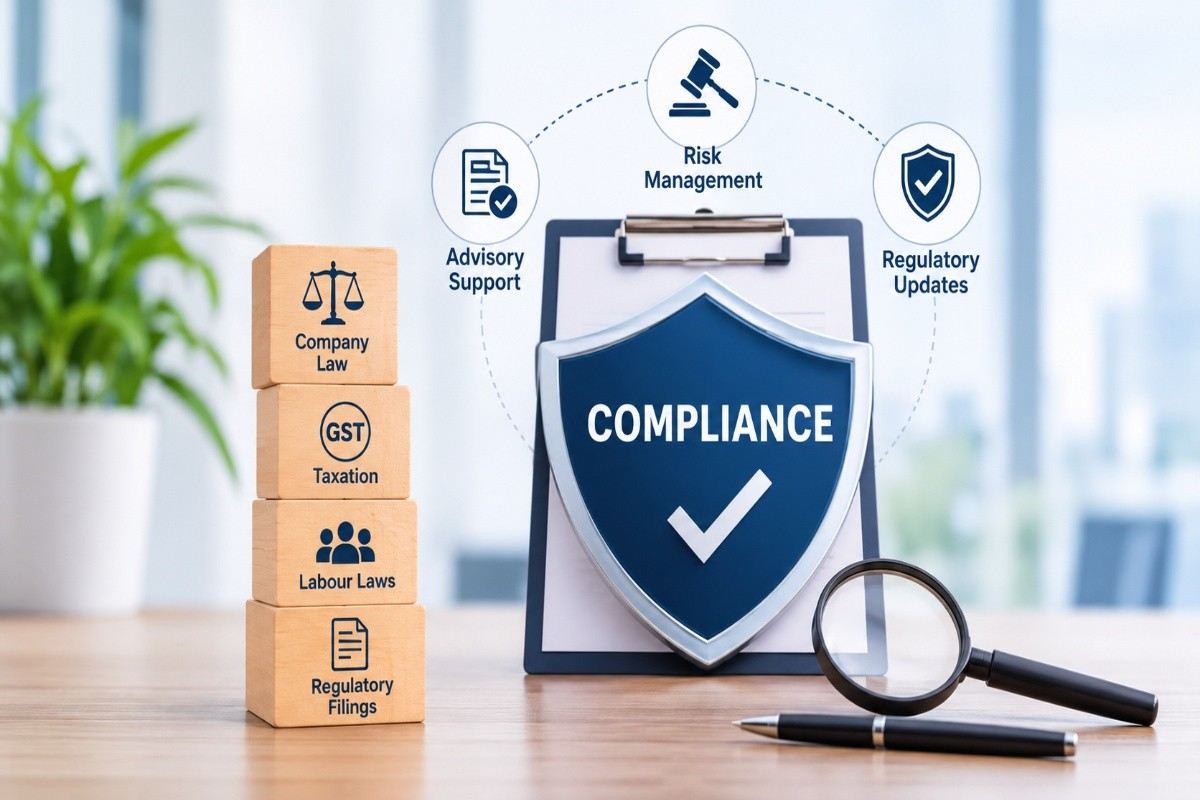
- Company law and statutory filings.
- Goods and Services Tax (GST) compliance.
- Income tax and TDS requirements.
- Labour law and employee-related compliance.
- Regulatory reporting and documentation.
- Maintenance of statutory records.
- Internal compliance reviews and risk assessments.
These services help businesses follow a planned approach instead of dealing with compliance issues only after they arise.
Why do businesses face regulatory risks in India?
Regulatory risks arise when a business fails to meet a legal or regulatory requirement. These risks can affect companies of all sizes, from new startups to established organisations.
Several factors can make compliance difficult.
1. Frequent Changes in Regulations
Government rules, filing procedures, and reporting requirements can change. Businesses that do not track these changes can continue following outdated processes.
2. Missed Filing Deadlines
Companies must complete several filings and payments within specific timelines. Missing a deadline can result in late fees, interest, or other penalties.
3. Incomplete Documentation
Incorrect records, missing invoices, and incomplete statutory registers can create problems during audits or regulatory inspections.
4. Lack of Internal Compliance Knowledge
Smaller businesses may not have a dedicated compliance team. As a result, founders or finance employees may handle legal and regulatory tasks without having complete knowledge of the requirements.
5. Multiple Compliance Responsibilities
A business may need to follow company law, tax rules, and labour regulations at the same time. Managing these responsibilities without a proper system increases the chances of errors.
How do compliance advisory services help manage these risks?
A structured compliance process helps businesses identify problems before they become serious. Compliance advisory services in India support this process by reviewing existing practices and suggesting changes where needed.
Here are some ways these services help manage regulatory risks.
1. Identify Compliance Gaps
A compliance review helps businesses understand whether their current processes meet legal requirements. Advisors examine records, filings, registrations, and internal procedures to find missing or incorrect information.
This allows businesses to fix gaps before they lead to penalties or legal issues.
2. Track Regulatory Changes
Businesses need to stay aware of changes in laws that affect their operations. Professional advisors help track relevant updates and explain how they apply to the company.
This is an important part of compliance consulting, especially for businesses operating in more than one state or industry.
3. Improve Filing Accuracy
Incorrect filings can create unnecessary problems. Advisors review financial and statutory records to help businesses prepare accurate returns and submit the required information within the applicable timelines.
4. Reduce Legal and Financial Risks
A planned compliance process helps businesses avoid late fees, interest, penalties, and other costs linked to non-compliance. It also helps management address potential issues before they affect business operations.
5. Maintain Proper Records
Businesses need to maintain documents that support their statutory filings and financial activities. Advisors help establish proper record-keeping practices, making it easier to respond to audits, inspections, and regulatory queries.
What should businesses look for in a compliance advisory partner?
Choosing the right advisory partner is important because compliance requirements differ from one business to another. Businesses should look beyond basic filing support and assess whether the provider can help manage their wider regulatory responsibilities.
Before selecting among compliance companies in India, consider the following factors:
| Factor | What to Check |
| Industry Knowledge | Understanding of the laws and regulations that apply to the business. |
| Service Range | Support for tax, company law, labour laws, and other relevant requirements. |
| Regulatory Updates | Ability to track changes in applicable rules and regulations. |
| Documentation | Proper maintenance of records and filing documents. |
| Communication | Clear updates about upcoming deadlines and pending tasks. |
| Risk Assessment | Ability to identify compliance gaps and suggest corrective measures. |
A suitable partner should understand the company’s needs and provide support based on its size, structure, and business activities.
Compliance advisory services vs regular compliance services
Both services help businesses meet legal requirements, but their focus can differ.
- Compliance services in India often focus on routine activities such as preparing returns, maintaining records, and completing statutory filings.
- Advisory support focuses on understanding regulatory risks, reviewing existing processes, and recommending ways to address compliance gaps.
- Compliance consulting can include both activities, depending on the scope of work.
Businesses often need a combination of routine compliance support and advisory guidance. This helps them manage everyday obligations while preparing for regulatory changes.
Building a proactive approach to regulatory compliance
Managing regulatory risks requires regular attention. Businesses should not wait for a notice or penalty before reviewing their compliance practices. Regular checks, accurate records, and timely filings can prevent many common issues.
For startups, SMEs, and growing businesses, working with experienced advisors can make these responsibilities easier to manage. Infinzi provides compliance advisory services in India to help businesses understand their regulatory responsibilities and manage compliance requirements. Its approach to compliance consulting supports businesses in identifying gaps and maintaining better compliance practices.
Businesses looking to strengthen their regulatory processes can connect with Infinzi to explore suitable compliance support and take a more organised approach to managing regulatory risks.
Alongside compliance support, having reliable accounting services in India can help businesses maintain accurate financial records and make informed financial decisions. A structured approach to accounting and regulatory management also supports smoother business operations as companies grow.